Monson, Massachusetts · Exeter, England
Brass, up close
Two things I offer: hear the tuba in jazz, played a few feet away; and try the brass yourself, with a fun mini lesson.
Comments welcome: how to annotate this page
- Select any text and click Annotate in the small pop-up.
- The first time, sign up for a free Hypothes.is account.
- To read other comments, open the panel with the arrow at the top right. Highlighted text has comments on it.
Comments in the Public group are visible to anyone who opens the page. Rather email? daaronr@gmail.com.
Why hear it in person
You can hear all of these instruments on recordings, but brass never sounds as good as it does live, in the room you're sitting in.
A tuba's low notes, a trombone's slide and a French horn's warmth come through the air and the floor in a way no speaker reproduces. That matters more for brass than for electronic instruments, or even a piano, whose sound is more fixed. Most people have never heard a tuba from three feet away, let alone played one.
Idea 1 · Listen
The tuba in jazz
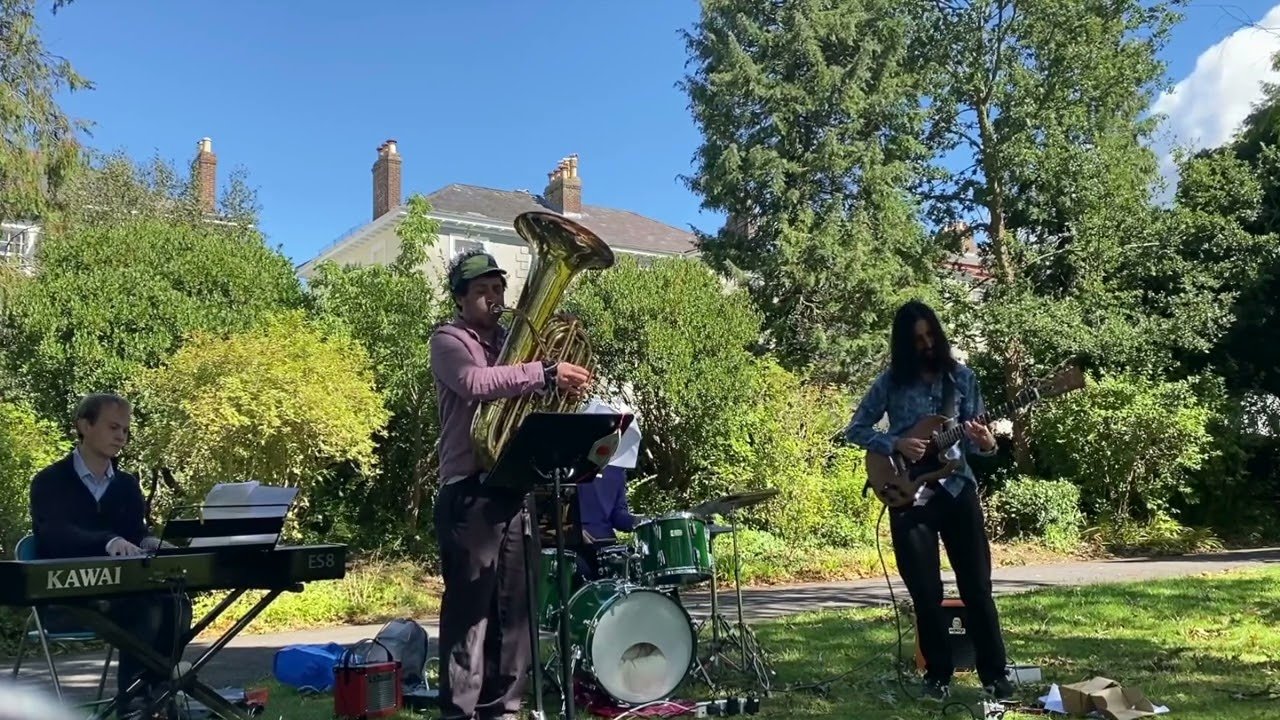
I play jazz tuba and show where it fits: from marching bands and 1920s records to walking bass in a modern trio. Talks with live playing, and live sets.
Idea 2 · Play
Try the brass
You try the tuba, trombone, trumpet and more, with a fun mini lesson and me playing alongside. One-on-one at home, or at a library or event.
The two overlap (both are about hearing brass up close), but you can book either on its own. Around Monson and Springfield; MetroWest (Framingham and nearby) by arrangement; Exeter and Devon in summer.
Idea 1 · Listen
Talk and play
About 60 minutes · libraries, senior centers, clubs · fee on request
Short clips of classic recordings, from Sousa marches to Gil Evans, each followed by the same kind of bass line played live, so you hear the difference in the room.
Live sets
Pubs, breweries, cafes, private events
Jazz standards with a small group, tuba on bass. A try-a-horn table afterwards is optional (see Idea 2).
Coming: the guitar in jazz
In discussion
A companion session on the guitar's role, from banjo and rhythm guitar to modern comping, with the trio's guitarist. The two could pair as one program.
The tuba in jazz
The tuba played the bass in marching bands and in the first jazz bands. Around 1930, as recording improved and the four-to-the-bar swing feel took over, the string bass took the job. Since then the tuba has turned up in jazz now and then: as a color in Gil Evans's arrangements, in a handful of modern groups, and as the engine of New Orleans street brass bands. I play it the way a jazz bassist plays: walking lines under a small group.
Me, playing walking bass on tuba
More of my playingExeter quartet, busking, a Giant Steps joke
More in my jazz tuba playlist and on the GTD Trio page.
A short listening tour
These are the recordings I draw on for the "tuba in jazz" program. Listen to them, then imagine the same bass line coming out of a real tuba a few feet from you. That's the part a recording can't give you.
1. Marches: where the big horn comes fromSousa's Band, 1908
Brass bass instruments anchored military and concert bands long before jazz. John Philip Sousa's band made the sousaphone famous, and early jazz musicians came up through these bands.
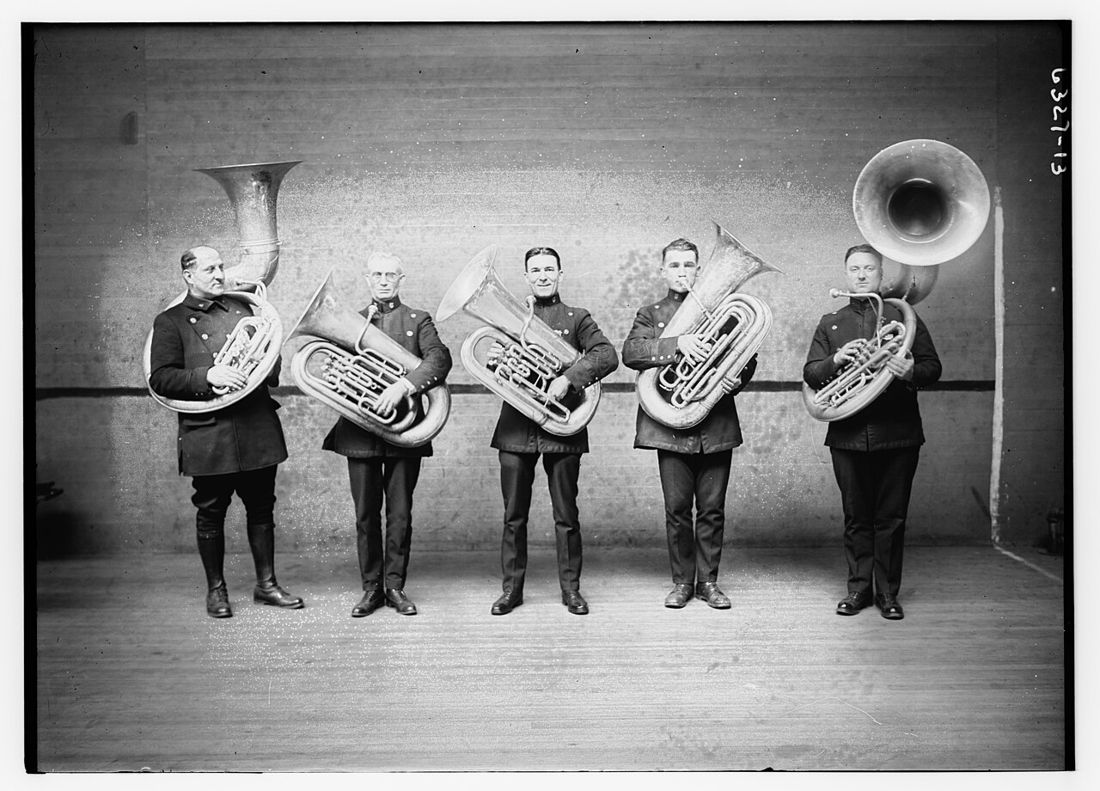
2. The 1920s: the "recording tuba"Fletcher Henderson, the Hot Seven
Early recording horns picked up a tuba more clearly than a string bass, so many 1920s dance and jazz records have a tuba on the bottom, playing mostly on beats one and three.
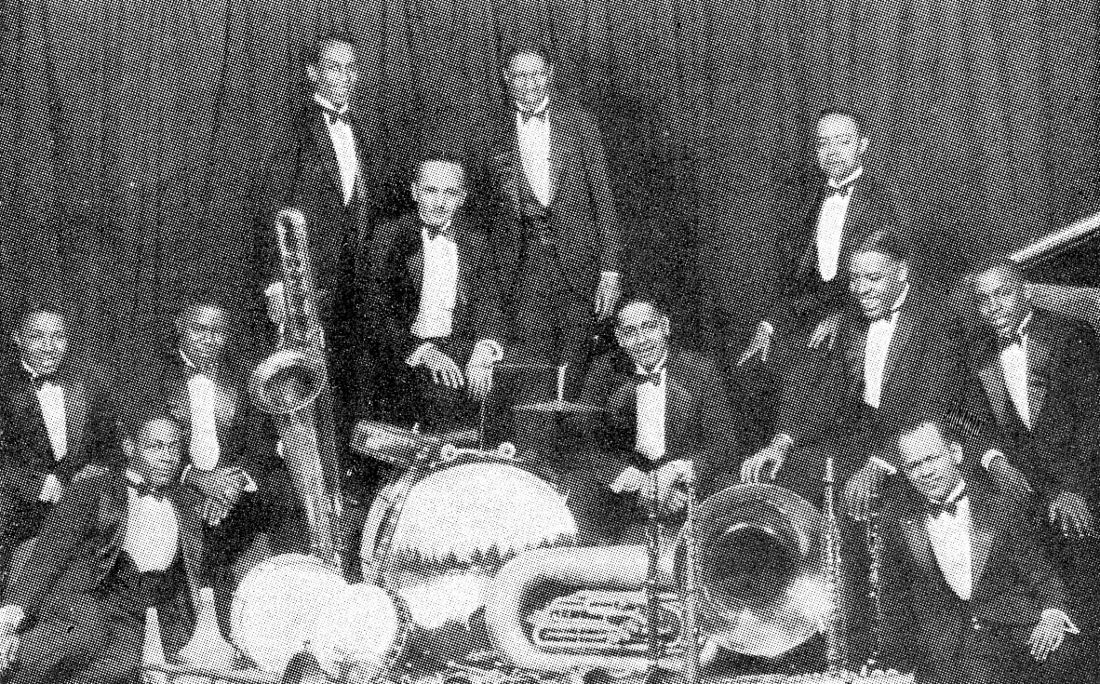
3. Around 1930: the string bass takes the jobEllington, tuba vs string bass
With electrical recording and the smoother four-to-the-bar swing feel, bands switched to string bass. You can hear the change in Duke Ellington's band.
4. Gil Evans: the tuba as a colorBirth of the Cool, Miles Ahead
In the late 1940s Gil Evans and Gerry Mulligan used tuba and French horn in Miles Davis's nonet, not as the bass but to thicken and soften the band's chords. Evans kept using tuba in his arrangements for decades.
5. Since then: a rare but distinctive voiceHoward Johnson, Theon Cross, Dirty Dozen
The tuba has never gone mainstream in jazz, but a handful of players have made it sing, and in New Orleans street brass bands the sousaphone never left.
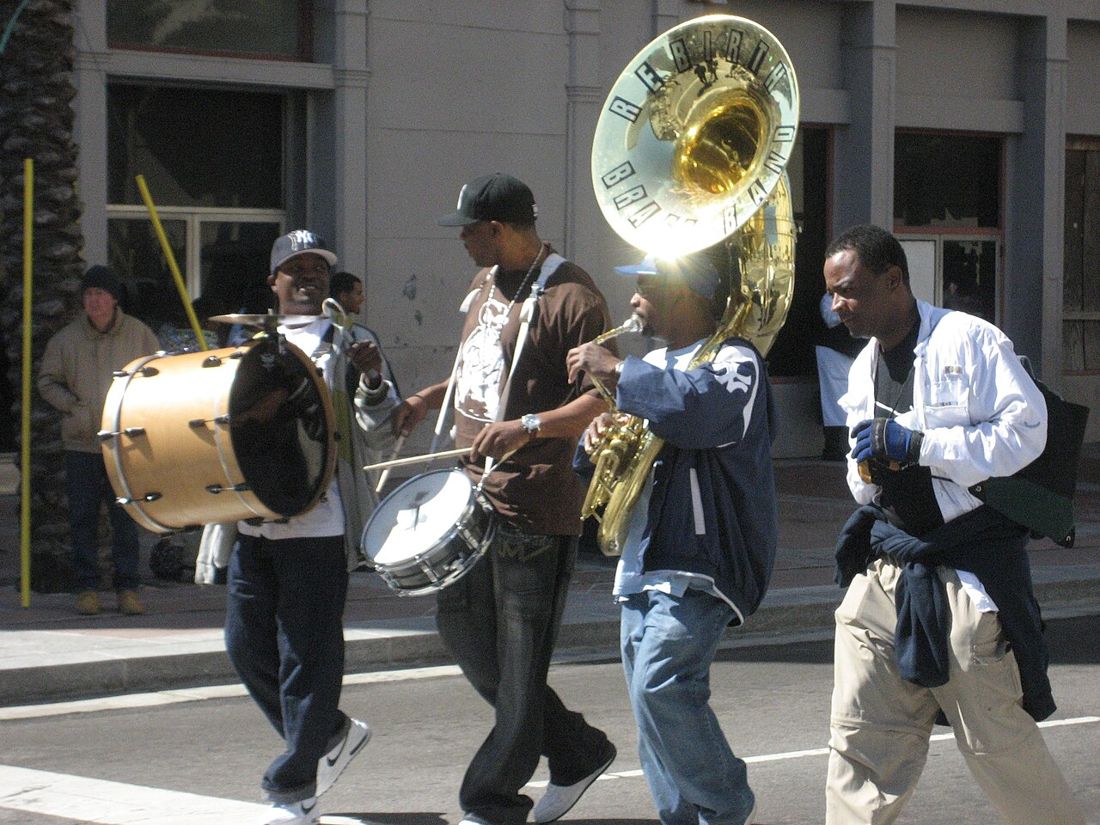

Videos are the rights holders' own uploads on YouTube; pre-1926 recordings and the older photos are public domain in the US.
Idea 2 · Play
Try the brass
And playing one is easier than people think. The same two "open" notes work on every horn here without pressing a valve, so within a few minutes you can play a real bass line or a blues riff while I play along.
One-on-one sessions
At my home in Monson (October to May) or my shed in Exeter (summer). Just you, or a child with a parent. No experience needed and no need to read music. Instruments and mouthpieces are provided; mouthpieces are cleaned and disinfected between every player.
Try the brass
About 60 minutes
Hear each horn up close, pick two or three to try, and finish with a blues riff over walking tuba bass.
Try them all
About 90 minutes
Four or five instruments, with honest advice on which suits you and what a decent used one costs.
Big horn, small horn
About 45 minutes · child plus adult
For a child (about 7 and up) with a parent or another adult who stays in the room and can join in. A good way to choose a school band instrument.
Coming back to it
About 60 minutes
Played in school and stopped? Get your lip back, play some tunes, and find a band.
Cost: about what a private lesson costs locally, with all the instruments included; less for a short taster. The first few people get a reduced rate in exchange for honest feedback. Follow-on lessons are available too. Get in touch for details.
How sessions workhygiene, children, where
- Mouthpieces: I provide them. Each one is washed, brushed and disinfected between players, and nobody uses mine.
- Children always come with a parent or another adult who stays in the room.
- Where: indoors at my home in Monson or my shed in Exeter. The address comes with the booking.
- Unwell? Please rebook if you have a cold or cold sore; there's no charge for moving.
- Tubas are played sitting down, resting on a stand or chair.
For groups: "Brass up close"
For libraries, senior centers, schools and events: I play each instrument a few feet from the audience and explain what it does in a band, then volunteers come up and try, with clean mouthpieces from a cleaning station. About 60 minutes, any audience size; fee on request.
The instruments
All pitched in B-flat, so the same fingerings and notes carry across, and ideally in pairs: I play one while you play its twin or a close relative.
- Four-valve BBb tuba (one in each country)
- Jazz trombones
- Classical trombone with F trigger
- 1920s flugelhorn
- Cornet
- Trumpet (soon)
- Double French horn (soon)
- Euphonium (soon)
- Second trombone (soon)
Solid lines: in hand. Dashed: buying used this winter. Which instrument would you most want to try?
Got a horn gathering dust?
If you have a brass instrument you'd like to sell, I may be able to borrow it. It gets played and tried by people who might want one, and if someone does, you sell it to them directly at your price. You stay the owner and can take it back any time. It's informal and small-scale, and I'm happy to talk it through.
About me
I'm David Reinstein. I play jazz tuba, walking bass lines the way a string bassist would, plus trombone and flugelhorn. In Massachusetts I play with the GTD Trio (guitar, tuba, drums); in Exeter with the Kay House Ensemble and others. I split the year between Monson and Exeter.
Children always come with a parent or another adult who stays in the room. I'll have the usual background checks (CORI in Massachusetts, DBS in the UK) in place before sessions with children begin, along with liability insurance and a written safety policy.
Feedback, please
This is a trial balloon. I'd love to know:
- Which appeals more: hearing the tuba in jazz (Idea 1), or trying the brass yourself (Idea 2)? Both?
- Would you (or someone you know) book a session? Which one?
- What would you expect to pay for an hour like this?
- Which instrument would you most want to try?
- Do you know a library, senior center, school, pub or cafe that might host a tuba-in-jazz talk, a live set, or a "Brass up close" try-out?
- Anything confusing or off-putting on this page?
Highlight any text to leave a comment (the Hypothes.is panel, top right), or email me.
Email David